








BlackTreeLab
Fire Opal Engagement Ring Set "Vivienne" — Solid 14K Gold


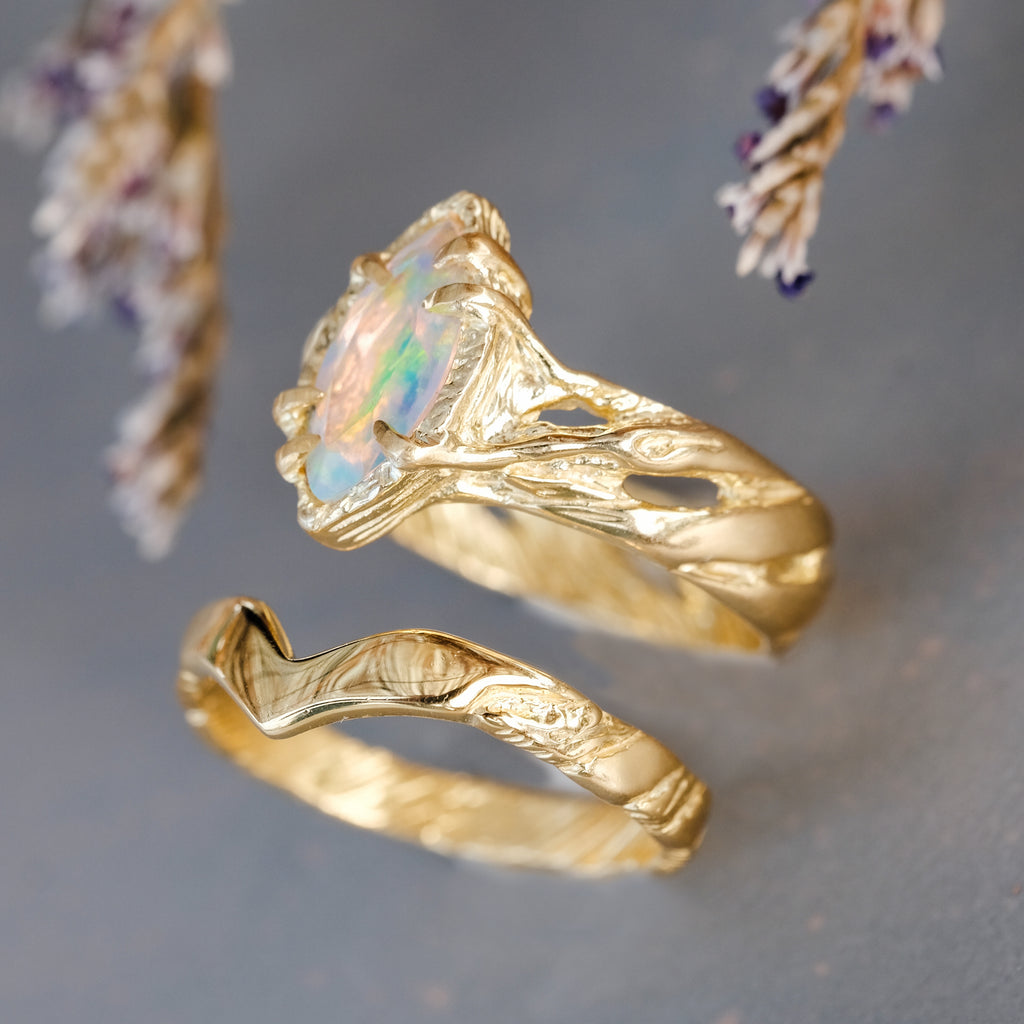
Gold Opal Bridal Set — Ethiopian Fire Opal Held in Carved Roots, with a Matching Band
An opal does not sit still. Turn your hand and the color inside it moves — green, then red, then orange — and no two stones repeat the sequence. That is the whole argument for building a ring around one: it is the only stone that changes while you are wearing it.
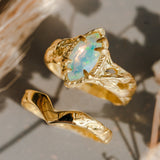
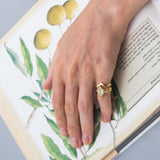
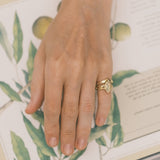
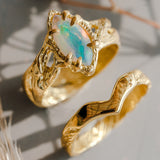
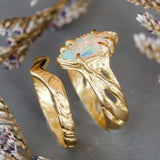
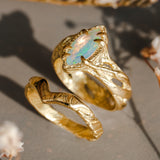
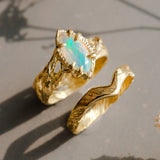
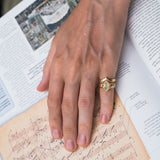
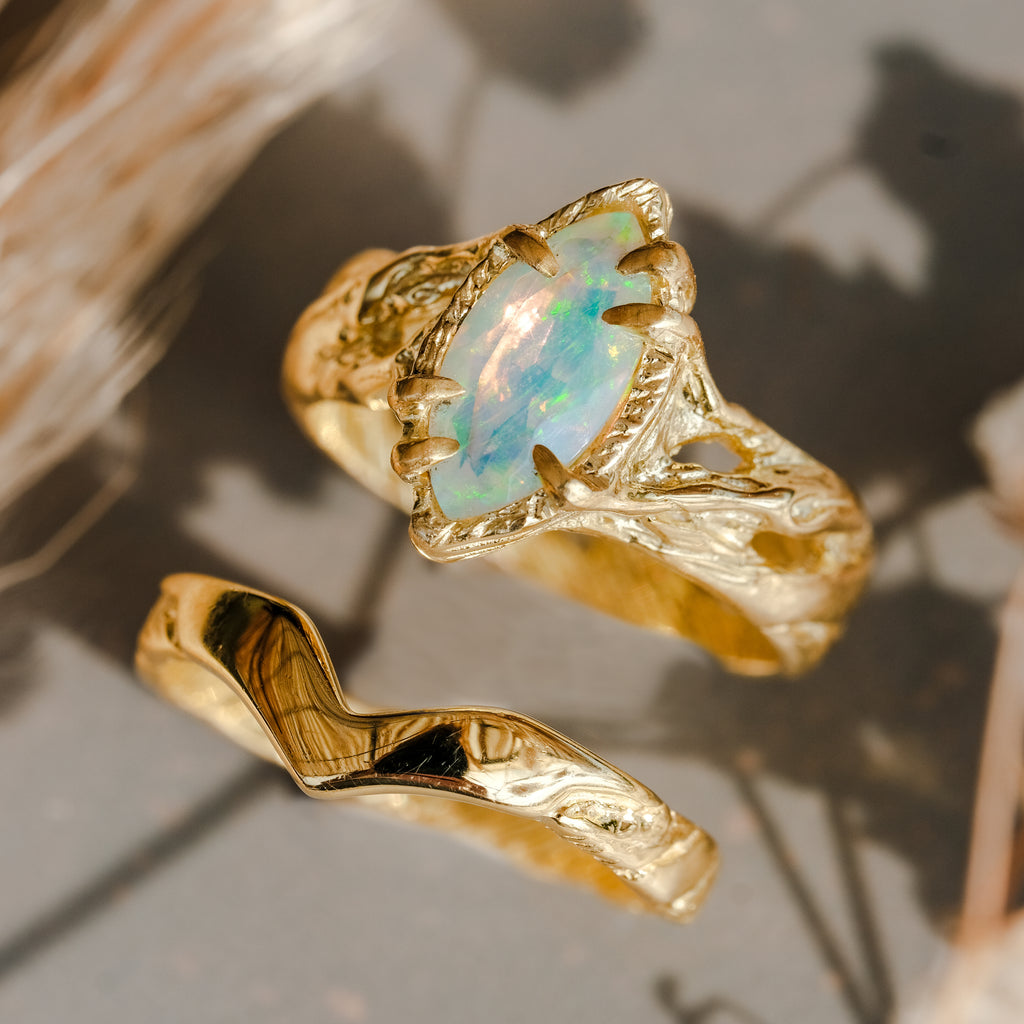
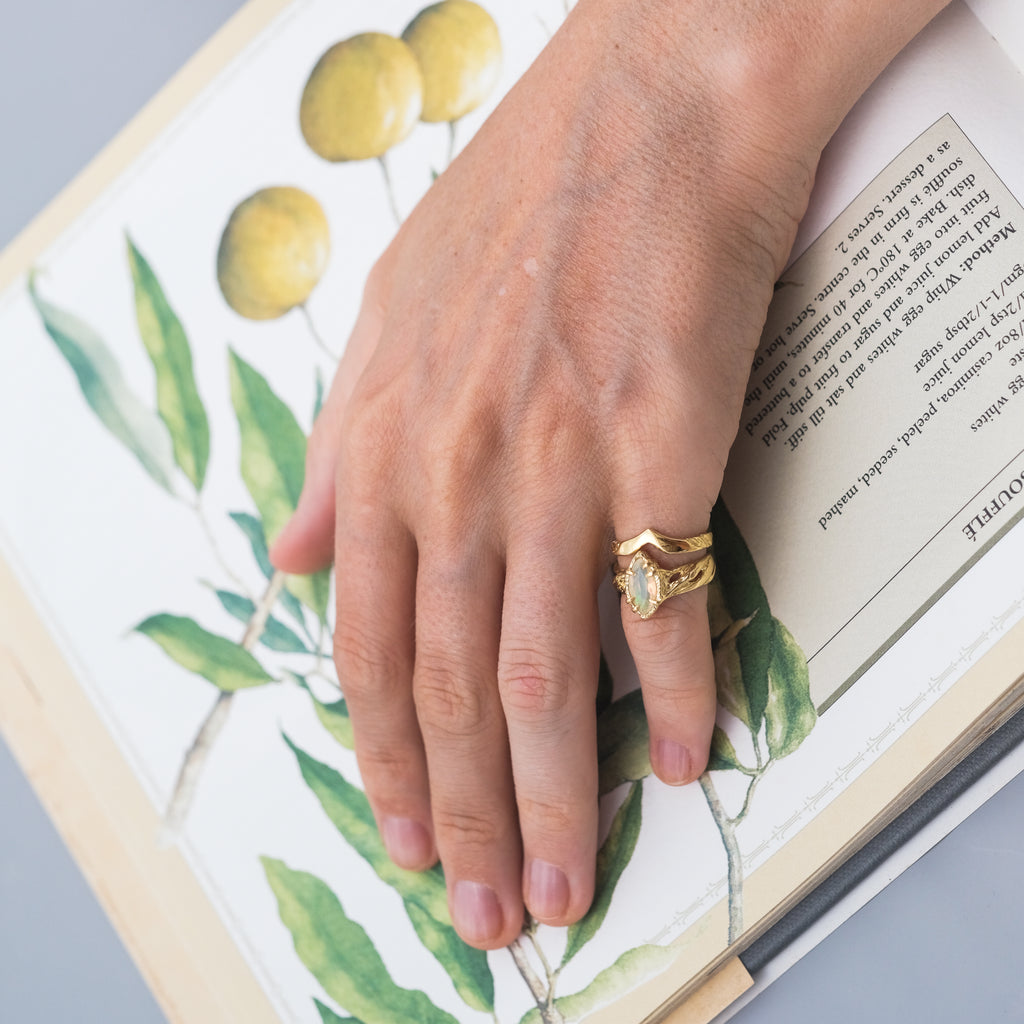
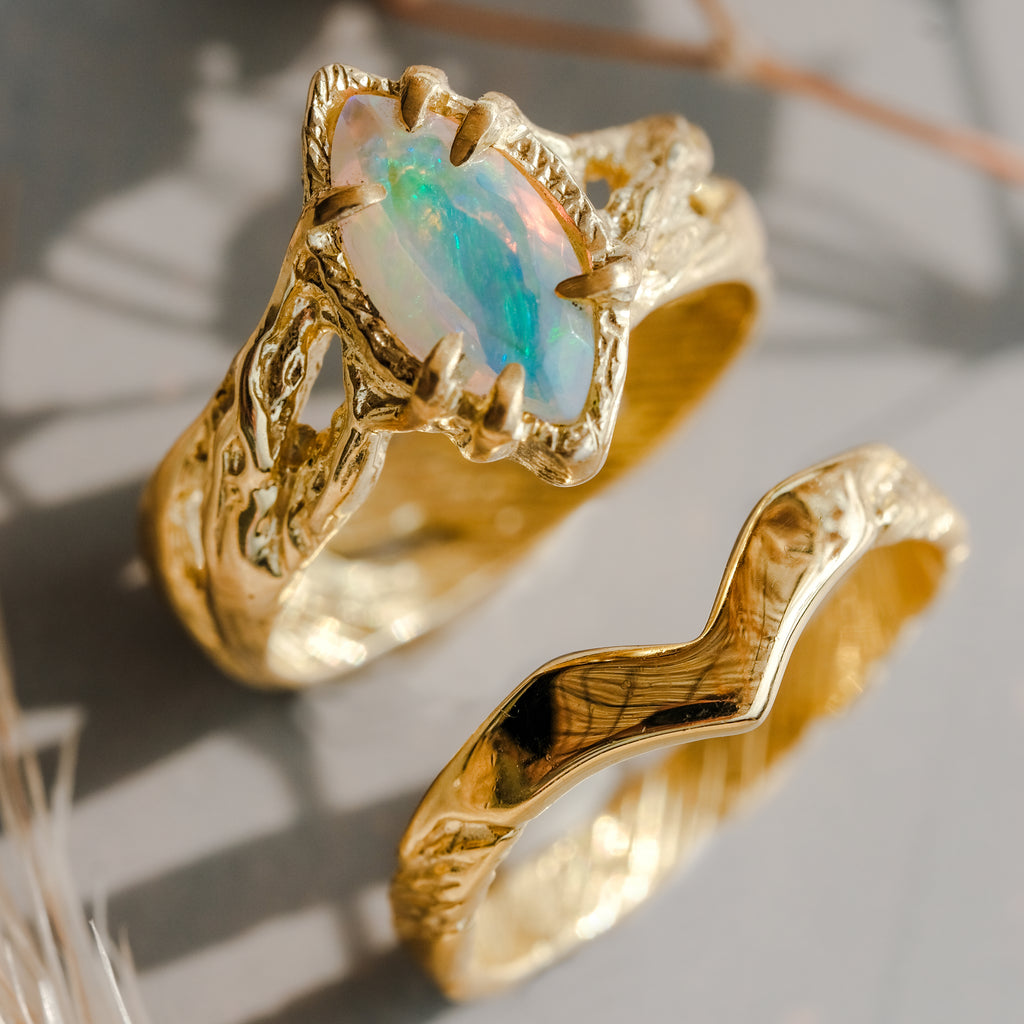
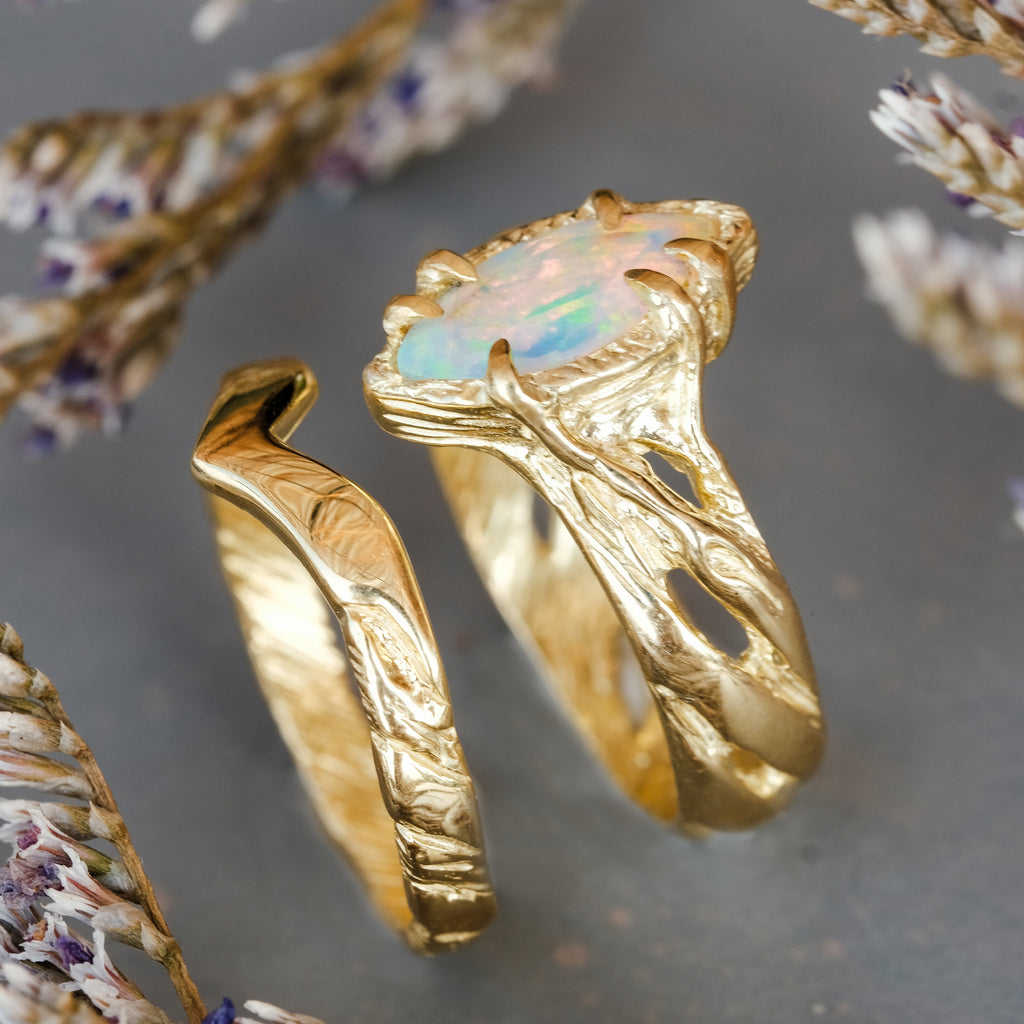
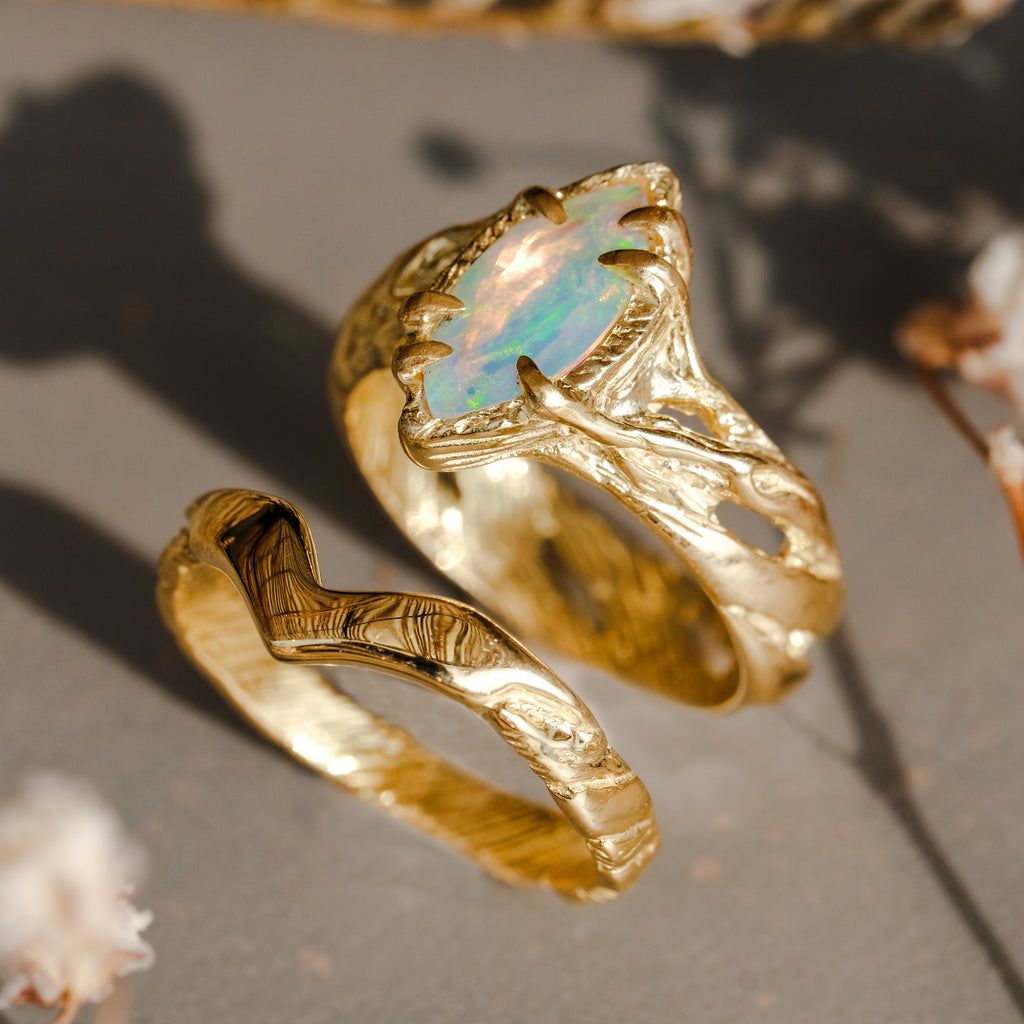
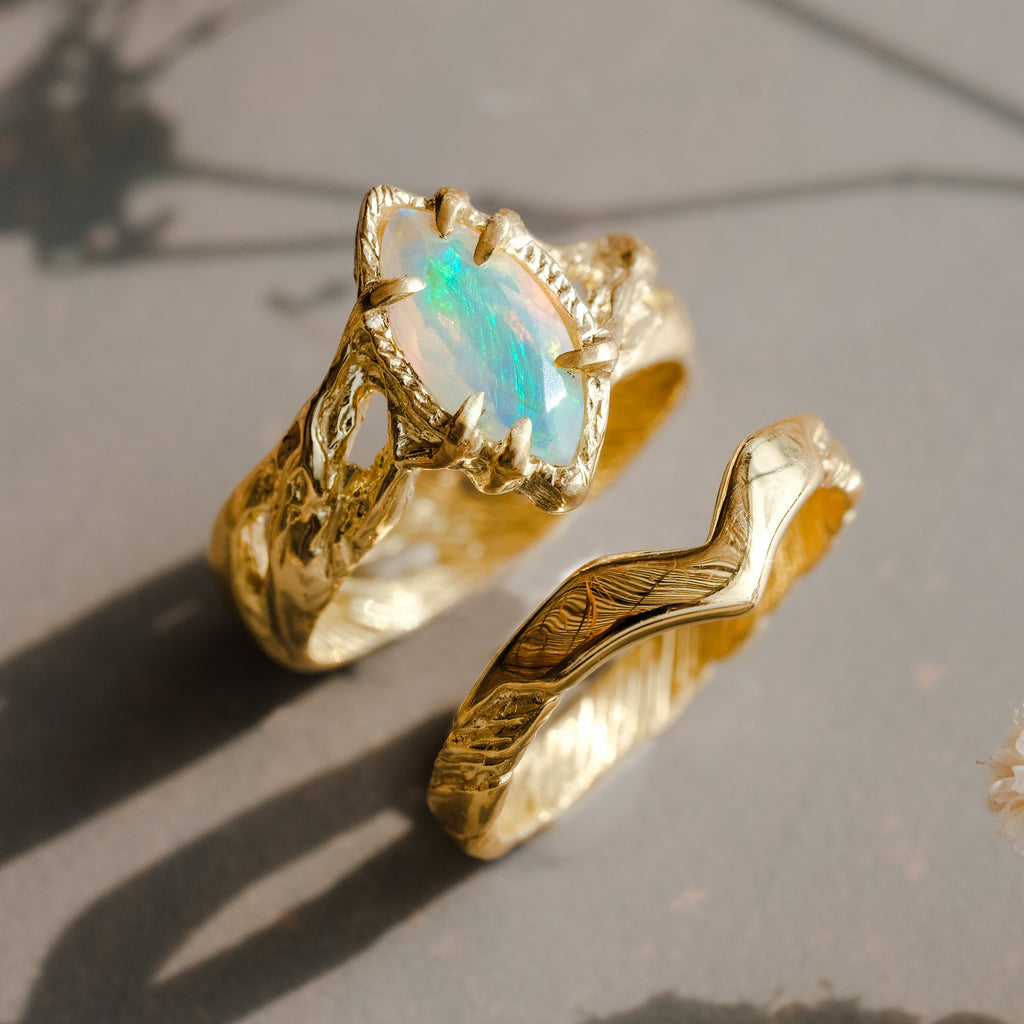
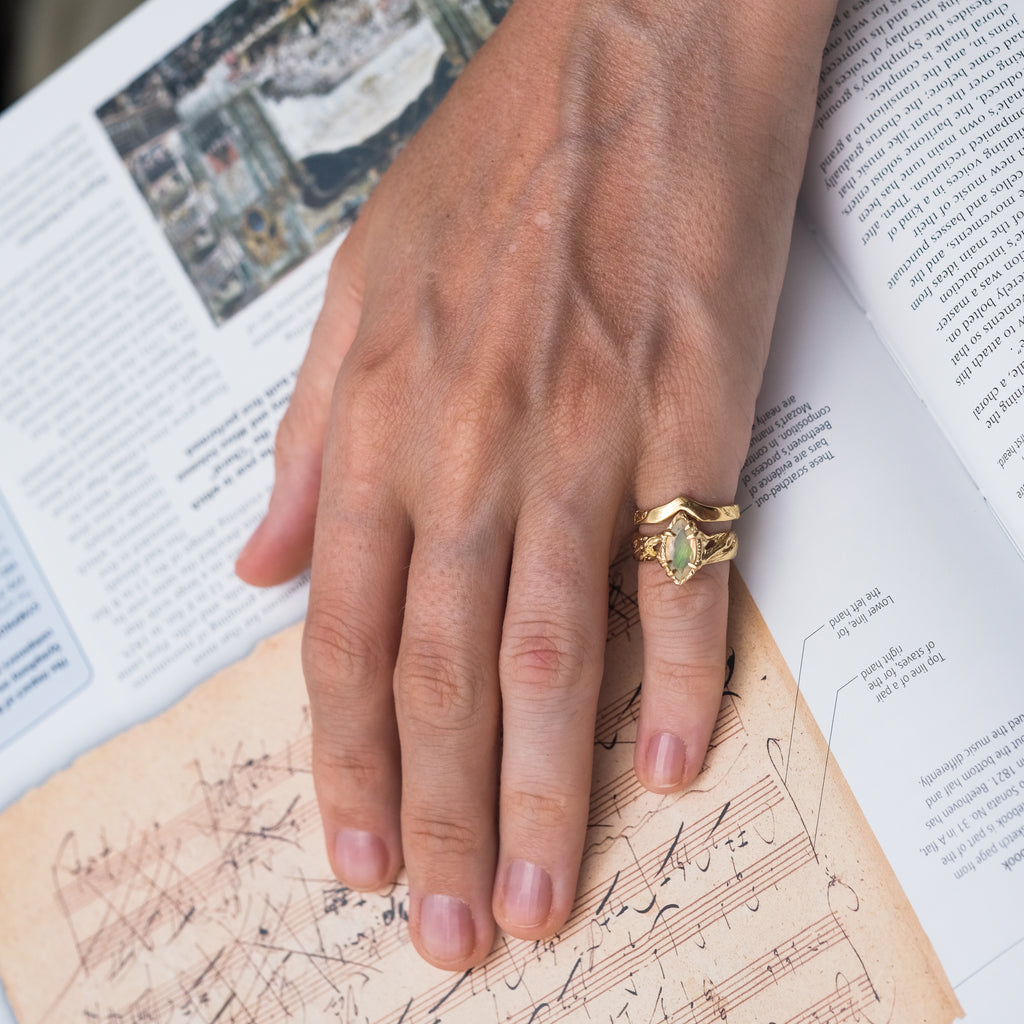
A fire opal engagement ring set in solid 14K gold: a 10×5 mm natural Ethiopian fire opal held in carved roots, with a 3 mm matching band. Yellow, rose or white gold, selected above.
The stone
Ethiopian fire opal, 10×5 mm, cut as a cabochon. The flashes come from microscopic silica spheres inside the stone diffracting light, which is why the color shifts with the angle instead of staying put. Each stone is chosen individually; the sequence of colors is never the same twice.
Opal is a softer stone than most — 5.5 to 6.5 on the Mohs scale — and Ethiopian opal is hydrophane, which means it absorbs water. That is worth knowing before buying rather than after: take the ring off before water and it will last a lifetime. There is more on this in the questions below.
The setting
The stone is held in a claw setting built from branching roots rather than a plain bezel, so the opal looks grown into the ring instead of mounted on it. The band carries wood grain texture worked line by line in the wax.
The matching band
3 mm, in the same gold, with the same texture, shaped to sit against the engagement ring. On its own it reads as a plain textured band, which is what most people want from the half of a bridal set worn on ordinary days.
Solid gold
14K gold throughout, in yellow, rose or white at the same price. Plating is a thin surface layer that wears off and has to be redone; on solid gold there is no layer to wear through. 14K is also harder than the higher karats, so it holds a polish.
Rose gold picks up the warm end of the opal's fire. White gold throws the greens and blues forward. Yellow gold sits closest to the stone's own tone.
How it is made
Both rings begin as hand-sculpted wax models in our own workshop, are cast in solid 14K gold and finished by hand. Every piece carries a lifetime warranty.
An Ethiopian opal engagement ring is not a conventional choice, and people who make it usually know that already. A 14K gold fire opal ring like this one gets taken for weddings, for anniversaries, and by people who simply wanted a stone that moves.
Engagement ring:
- Solid 14K gold — yellow, rose or white, selected above at the same price
- Natural Ethiopian fire opal
- Stone size: 10mm x 5mm
- Claw setting built from branching roots
- Wood grain texture
Matching band:
- Solid 14K gold, same color as the engagement ring
- Wood grain texture
- Band width: 3mm
- Mohs hardness: 5.5–6.5
- Hand-sculpted wax models, cast and finished in our own workshop
- Lifetime warranty
Important information about the Rings:
Both rings are made to order in your size. Currently, due to high order volume, production time is 6-7 weeks to ship. Due to the handmade work and natural origin of the stones, each piece is unique and may slightly vary.
Kindly note that healing gemstone meanings are not prescriptions or healthcare information.
Frequently asked questions
Can you wear an Ethiopian opal ring every day?
What does hydrophane opal mean?
How hard is fire opal?
My opal looks cloudy or dull — what do I do?
Is opal a birthstone?
Is this solid gold or gold plated?
Can I choose the gold color?
Does the band sit flush against the engagement ring?
Related Products


Rainbow Moonstone Pendant "Louise"


Amethyst ring "Isla"


Sterling Silver men's band "Mio"


